





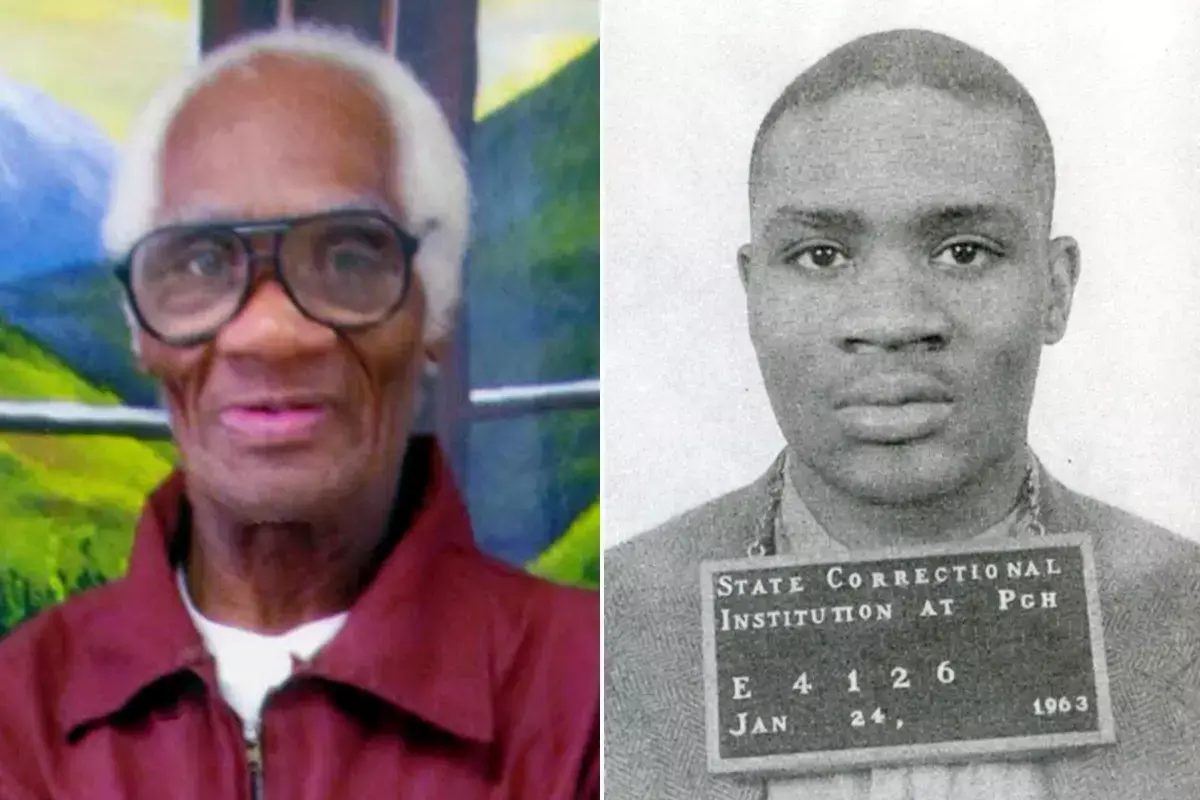
 Joseph Ligon
Summer 2026
Our Mission Statement: Our mission is to advocate for justice, fairness, and second chances for youth impacted by the criminal justice system by working to end life sentences for crimes committed by juveniles. Inspired by the story of Joseph Ligon, we strive to raise awareness of the harmful consequences of sentencing children to die in prison, promote rehabilitation over permanent punishment, and support policies that recognize the capacity of young people to grow, change, and contribute positively to society. We are committed to protecting the rights of all youth, addressing racial and social inequities in sentencing, and ensuring that every child is given a meaningful opportunity for redemption, hope, and a future beyond their mistakes.
Joseph Ligon and the Injustice of
Juvenile Life Sentences in the United States
Joseph “Joe” Ligon’s story has become one of the most powerful examples of why sentencing children to spend the rest of their lives in prison is widely viewed as unjust. At the age of 15, Ligon was arrested in Philadelphia, Pennsylvania, in 1953 and was convicted alongside several other teenagers for crimes that resulted in two deaths. Although Ligon admitted participating in the events and acknowledged stabbing one victim who survived, he consistently denied committing the murders themselves. Nevertheless, he was sentenced to life imprisonment without the possibility of parole and ultimately spent 68 years behind bars, making him the longest-serving juvenile lifer in U.S. history before his release in 2021 at age 83. [en.wikipedia.org], [cbsnews.com]
Ligon’s case highlights a larger problem within the American justice system: the practice of sentencing juveniles to die in prison. Scientific research has repeatedly demonstrated that adolescent brains are still developing, particularly in areas involving judgment, impulse control, and decision-making. Because of this, the U.S. Supreme Court has recognized that children are fundamentally different from adults when it comes to criminal responsibility. A series of major Supreme Court decisions—including Roper v. Simmons (2005), Graham v. Florida (2010), Miller v. Alabama (2012), and Montgomery v. Louisiana (2016)—have limited the harshest punishments that can be imposed on juveniles. [sentencingproject.org], [jlc.org]
Despite these legal reforms, thousands of youths were previously sentenced to life without parole. According to the Sentencing Project, there were approximately 1,465 people serving juvenile life-without-parole (JLWOP) sentences in 2020, while another study found that more than 2,900 juveniles had received these sentences nationally since the late 1940s. The Campaign for the Fair Sentencing of Youth reports that the number of people currently serving life-without-parole sentences for crimes committed as children has fallen dramatically to approximately 412 individuals as of 2025, down from roughly 2,800 people at its peak. More than 1,200 former juvenile lifers have been released since the Supreme Court’s Montgomery decision in 2016. [sentencingproject.org], [luskin.ucla.edu] [cfsy.org]
The distribution of juvenile life sentences has varied significantly by state. Pennsylvania historically had the largest population of juvenile lifers in the nation and sentenced more young people to life imprisonment than any other state. Today, 27 states and the District of Columbia have completely banned juvenile life without parole, while nine additional states have no individuals currently serving such sentences, even though the punishment may still exist in statute. However, some states continue to allow life-without-parole sentences for juveniles convicted of homicide offenses, meaning that children in certain parts of the country still face the possibility of never being released. [cbsnews.com] [sentencingproject.org] [jlc.org]
The injustice of juvenile life sentences extends beyond the punishment itself. Many juvenile offenders come from disadvantaged backgrounds, experience trauma, lack adequate legal representation, or are heavily influenced by peers. In Joseph Ligon’s case, his trial lasted only one day, and he later stated that he signed confessions without having proper access to family members or legal guidance. He was convicted largely through a theory of “guilt by association,” despite disputes over who actually committed the murders. [en.wikipedia.org], [cbsnews.com]
Critics argue that condemning a child to spend their entire life in prison ignores the basic reality that young people can grow, mature, and change. Internationally, the United States has long stood alone in permitting life-without-parole sentences for juveniles. Human rights organizations and juvenile justice advocates view such punishments as cruel because they deny children any meaningful opportunity to demonstrate rehabilitation and earn release. [sentencingproject.org], [jlc.org]
Joseph Ligon’s eventual release after nearly seven decades behind bars serves as a reminder of both personal resilience and systemic failure. While he finally regained his freedom, he lost most of his life in prison for actions committed as a teenager. His story underscores why many legal scholars, child advocates, and policymakers believe that children should never be sentenced to die in prison. Instead, they argue that justice should hold young offenders accountable while still recognizing their capacity for growth, rehabilitation, and redemption. In a society that claims to value second chances, Joseph Ligon’s case demonstrates the urgent need for fairer sentencing policies for juveniles across the United States.
The Juvenile Lifers Project will be a massively significant and impactful documentary feature film (and a short), as well as a verbatim (documentary) theater piece that we are preparing. We vigorously encourage all philanthropists, institutions, organizations (religious or otherwise), and all individuals to generously support this vital and humane effort. We, at the Juvenile Lifers Project, are grateful to all who support this project — and we thank you in advance.
Deferentially,
J.Bailey Morgan
Producing Artistic Director/Global Theater Audiences and
Global Director of Institutional Advancement
Principal Oral Historian /New Millennium Oral History Archives,
Chief Marketing Director/Global Brand Ambassadors
Wikipedia- AfroCrowd/ Global Correspondent
Executive Director/The Charles C. T. Bailey and Gladys M. Bailey Good Samaritan and Educational Brain Trust
Comedy Historian/Specializing in The Golden Age of Comedy from 1950 To 1975.
Email: staff@globaltheateraudiences.org
staff@oralhitstoryarchives.org
staff@globalbrandambassadors.org
jb_morgan@att.net
Ph 646-944-3412
Ph 917-378-0549
Ph 212-688-7421